Correlation Alarms
An Alarm corresponds to a row in the main dashboard gui.
The alarm lifecycle consists of phases, enumerated
in AlarmPhase.
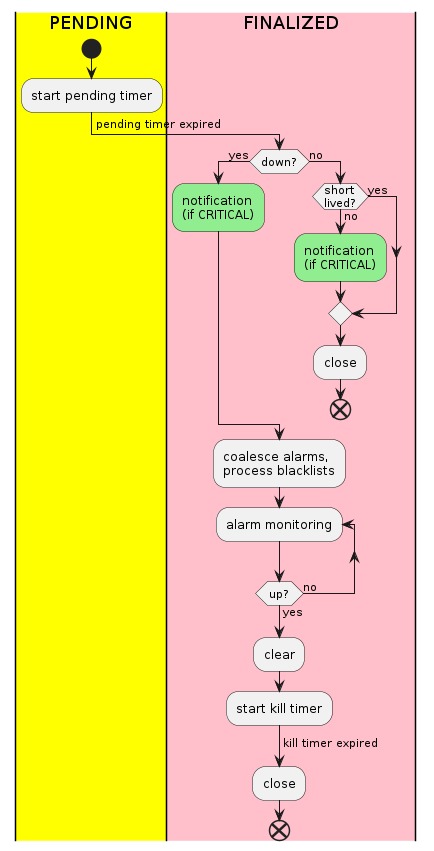
- class dashboard.correlation.alarm.Alarm(db_id, uuid, endpoints, assessor, phase, severity, dirty, published, description, previous_state=None, final_severity=None, alarm_group=None, devoured=None, publish_update=<function publish_alarm_update>)
- COALESCE_WINDOW_HOURS = 24
Similar alarms that occur within the coalescing window may be grouped together
- FLOOD_SLACK_TIME = 300
don’t accept new endpoints that are created longer than this number of seconds after the earliest endpoint in this alarm
- KILL_PERIOD = 30
after the alarm is finalized, if the alarm is up for this amount of time then discard it
- PENDING_PERIOD = 60
the period during which the alarm description can change
- SHORT_LIVED_ALARM_THRESHOLD = 120
if the alarm has been down for less than this value when finalizing, automatically close it
- apply_changes(severity=None, description=None, state=None, session=None)
- begin_lifecycle(session)
Begin the
Alarms lifecycle by initializing its phase handler. This method must be called (and only called once per Alarm) after the Alarm has been created and correct initial phase has been set.- Parameters:
session – a SQLAlchemy
Sessionobject
- can_accept_endpoint(endpoint)
Check if this alarm’s state allows the endpoint to be added.
Namely:
it’s within
FLOOD_SLACK_TIMEif the alarm isn’t PENDING, then the severity doesn’t increase and the description doesn’t change
This is only called after the endpoint has been correlated with one or more endpoints already present in this alarm.
- Returns:
true if this alarm can accept the endpoint
- cleanup_after_being_devoured(session)
- clear_current_timer(name=None)
Stops and removes the current timer, if it exists
- Parameters:
name – Optional, only stop the current timer if its
timer_namematchesname
- property contacts
- property dashboard_service
- property description
- devour_alarms(alarms_to_devour)
Take over all endpoints in alarms_to_devour, and free all resources from those alarms (e.g. stop timers, etc.).
- Parameters:
alarms_to_devour
- discard_endpoint(endpoint)
Discard endpoint from self.endpoints.
- Parameters:
endpoint
- Returns:
True iff the endpoint was found and removed
- dumpd()
Create a json-serializable dict that can be used to re-create this object.
- Returns:
a json-serializable dict
- property duration
Generalised method, should be overridden if there is a better field to be sorted on e.g. when they will always come from the same device use systemUpTime
WARNING: this method will fail in KILL_ME state
- Returns:
the time difference in seconds between the first trap and the current time or the last traps if the alarm is closed
- classmethod from_cache(endpoint_or_cached_dict)
- classmethod from_endpoint(endpoint_or_cached_dict)
- handle(**kwargs)
- property init_time
- initialize_phase(new_phase, session)
- property is_euro_hpc
- kill_alarm()
- learn_from_db(session)
workaround for the first time we reload the cache after introduction of phase (DBOARD3-242)
this method should only be called when loading the cache
- property locations
- notify_endpoint_state_changed()
- property phase
- phase_handler
- property project
- publish_state()
- property published
- release_all()
Release any resources that will prevent this object from being garbage collected.
This method leaves this object in a corrupt state.
- property resource_ids
- restart_kill_timer()
- restart_pending_timer()
- restart_timer(name, timeout_seconds, handler)
- save_if_dirty(session)
- property services
- set_published()
- property severity
- property state
- timer = None
- update_alarm()